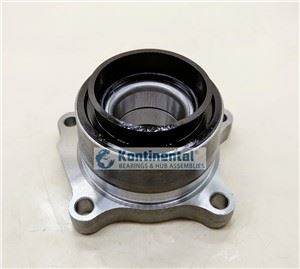
As a supplier of the product 43510 - 47012, I've been frequently asked whether this product can be used in a forecasting model. In this blog, I'll delve into this question and provide some insights based on my experience in the industry.
Understanding the Product 43510 - 47012
Before we discuss its applicability in a forecasting model, let's first understand what the product 43510 - 47012 is. Although the specific nature of this product isn't explicitly defined here, in the context of a supplier, it's likely a part or component used in a particular industry, perhaps automotive, given the nature of the related product links we'll be discussing later.
The product might have unique characteristics, such as specific dimensions, materials, and performance specifications. These features determine its usage and demand in the market. For example, if it's an automotive part, its demand will be influenced by factors like the production volume of relevant vehicle models, the replacement rate of parts, and technological advancements in the automotive industry.
Factors Affecting the Use of 43510 - 47012 in Forecasting Models
1. Historical Data
One of the fundamental elements of a forecasting model is historical data. For the product 43510 - 47012, we need to collect and analyze past sales data. This data can reveal patterns such as seasonal fluctuations, long - term trends, and cyclical variations.
If the product has a stable demand over time, with only minor fluctuations due to normal market conditions, it will be relatively easier to incorporate into a forecasting model. For instance, if we observe that sales of 43510 - 47012 increase slightly during certain months of the year, we can use this information to predict future sales during those periods.
However, if the historical data is scarce or highly erratic, it becomes more challenging to build an accurate forecasting model. This could be the case if the product is new in the market or if it's affected by sudden and unpredictable events, such as changes in regulations or disruptions in the supply chain.
2. Market Trends
The market trends in the industry where 43510 - 47012 is used play a crucial role in forecasting. For example, in the automotive industry, trends towards electric vehicles, autonomous driving, and lightweight materials can significantly impact the demand for different parts.


If 43510 - 47012 is a part used in traditional internal combustion engine vehicles, and the market is rapidly shifting towards electric vehicles, the demand for this product may decline in the long run. On the other hand, if it's a part that can be adapted for use in new - generation vehicles, its demand may increase.
We can also look at related products in the market. For example, the products 42450 - 02310 42450 - 02320 COROLLA MZEA12 ZRE212 and HIGHLANDER,42460 - 48040 are likely automotive parts. Analyzing their market trends can provide some insights into the potential demand for 43510 - 47012, especially if they are used in similar vehicle models or have complementary functions.
3. Competition
The level of competition in the market for 43510 - 47012 also affects its use in a forecasting model. If there are many competitors offering similar products, the demand for our product will be more elastic. Customers may switch to a competitor's product based on factors such as price, quality, and availability.
We need to monitor the actions of our competitors, such as their pricing strategies, new product launches, and marketing campaigns. For example, if a competitor launches a new and improved version of a similar product, it could lead to a decrease in the demand for 43510 - 47012.
4. Technological Advancements
In today's fast - paced world, technological advancements can quickly render a product obsolete or create new opportunities. If 43510 - 47012 is a technology - dependent part, we need to keep an eye on emerging technologies that could replace it or enhance its performance.
For example, if there is a new manufacturing process that can produce a more efficient and cost - effective alternative to 43510 - 47012, the demand for our product will be at risk. On the other hand, if we can incorporate new technologies into our product, it may increase its competitiveness and demand.
Types of Forecasting Models and the Suitability of 43510 - 47012
1. Time - Series Models
Time - series models are based on the assumption that future values of a variable can be predicted from its past values. These models are suitable for products with relatively stable demand patterns.
For 43510 - 47012, if the historical sales data shows a clear trend or seasonality, we can use time - series models such as the Moving Average model or the Exponential Smoothing model. The Moving Average model calculates the average of a certain number of past data points to predict future values. The Exponential Smoothing model gives more weight to recent data points, which is useful when the demand is changing over time.
2. Causal Models
Causal models, on the other hand, try to establish a relationship between the demand for a product and other factors, such as economic indicators, market trends, and competitor actions. These models are more complex but can provide more accurate forecasts when there are multiple factors influencing the demand.
For 43510 - 47012, we can use causal models to analyze how factors like the production volume of related vehicle models, the price of raw materials, and changes in consumer preferences affect its demand. For example, if we know that the demand for 43550 - 06040 is closely related to the demand for 43510 - 47012, we can include the sales data of 43550 - 06040 as an independent variable in our causal model.
Challenges in Using 43510 - 47012 in Forecasting Models
1. Uncertainty in the Supply Chain
The supply chain for 43510 - 47012 can be subject to various uncertainties, such as disruptions in the supply of raw materials, transportation delays, and labor strikes. These uncertainties can make it difficult to accurately predict the availability and cost of the product, which in turn affects the demand forecasting.
For example, if there is a shortage of a key raw material used in the production of 43510 - 47012, the production volume may decrease, leading to a shortage in the market. This can cause sudden changes in the demand as customers may look for alternative products.
2. Changing Customer Preferences
Customer preferences are constantly evolving, especially in industries like automotive. Customers may prefer different features, styles, and performance levels in the products they purchase. If 43510 - 47012 doesn't meet the changing customer preferences, its demand may decline.
It's difficult to predict exactly how customer preferences will change in the future, which adds an element of uncertainty to the forecasting process.
Conclusion
In conclusion, 43510 - 47012 can be used in a forecasting model, but it comes with its own set of challenges and considerations. By carefully analyzing historical data, market trends, competition, and technological advancements, we can build a more accurate forecasting model.
We need to choose the appropriate forecasting model based on the characteristics of the product and the nature of the data. Time - series models may be suitable for products with stable demand patterns, while causal models can provide more insights when there are multiple factors influencing the demand.
However, we also need to be aware of the uncertainties in the supply chain and changing customer preferences, which can make the forecasting process more complex.
If you are interested in our product 43510 - 47012 and would like to discuss potential procurement opportunities, please feel free to reach out. We are eager to engage in meaningful conversations and explore mutually beneficial partnerships.
References
- Armstrong, J. S. (Ed.). (2001). Principles of forecasting: A handbook for researchers and practitioners. Springer.
- Makridakis, S., Wheelwright, S. C., & Hyndman, R. J. (1998). Forecasting: methods and applications. Wiley.
- Montgomery, D. C., Jennings, C. L., & Kulahci, M. (2015). Introduction to time series analysis and forecasting. Wiley.